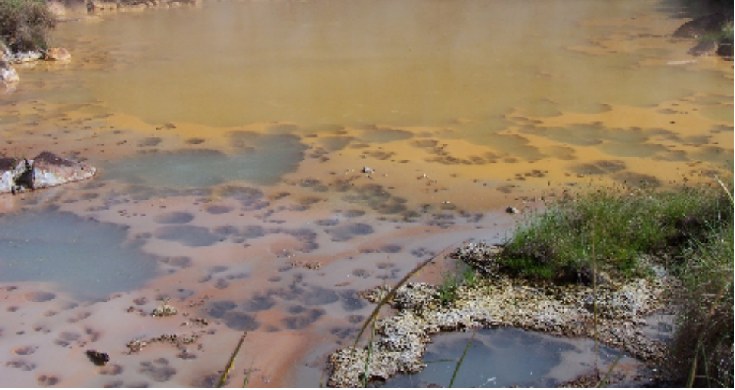
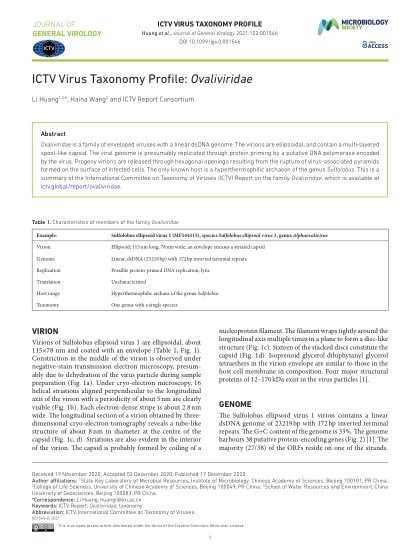
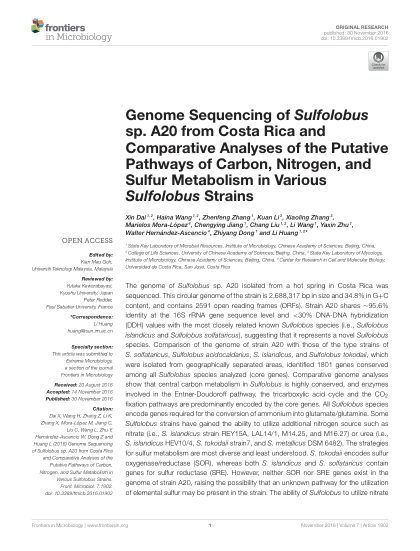
Acidic hot spring in Costa Rica (10°46.365′N, 85°20.646′W), 86–106 °C, pH 2.2–2.5. SEV1 was isolated from a hot spring in Costa Rica.
Viral Infection Strategies under Extreme Environments
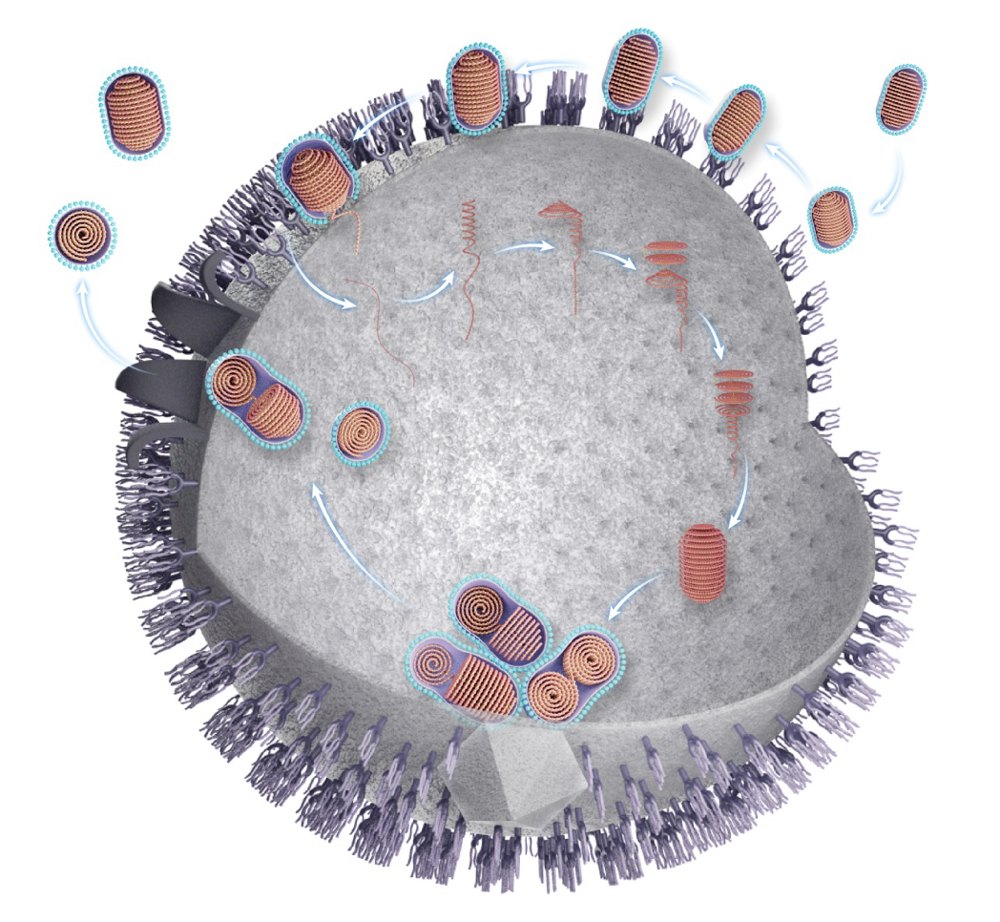
During my Ph.D. study at the Institute of Microbiology, Chinese Academy of Sciences (IMCAS), I investigated virus-host interactions in acidic hot springs in Costa Rica, focusing on a central question: What infection strategies enable viruses to maintain structural integrity and successfully propagate under extreme acidothermal conditions (pH 2–3, 86–106 °C)? Starting from hot spring sediments, I established an interaction system between Sulfolobus sp. A20 and an enveloped archaeal virus, Sulfolobus ellipsoid virus 1 (SEV1). By integrating cryo-electron tomography (cryo-ET), cryo-focused ion beam (cryo-FIB) milling, and subtomogram averaging (STA), I obtained the following findings: (1) A “coiling-stacking” genome-packaging model for SEV1. I proposed that a single major capsid protein binds viral DNA to form nucleoprotein filaments like “beads-on-a-string”, which then coil and stack layer by layer to build the nucleocapsid. Homologs of this protein are distributed across hot springs worldwide and deep-sea environments, suggesting a conserved strategy for protecting genetic material under extreme conditions. (2) A structural adaptation mechanism combining a flexible nucleocapsid with envelope-mediated stability. In contrast to many extremophilic viruses that rely on rigid architectures for stability, SEV1 displays a highly flexible nucleocapsid, whereas the envelope plays a decisive role in maintaining structural stability. (3) An integrated picture of the entire infection cycle of SEV1 in its native state. I captured the full process of virion maturation within the host cytoplasm and progeny release through hexagonal pyramidal openings, leaving behind ghost cells. These observations revealed a distinctive assembly and egress route for enveloped archaeal viruses.
Collectively, this work elucidated the structural stability and infection strategies that SEV1 has evolved for survival in extreme acidothermal environments, expanding our understanding of life processes in extreme environments.
This research was supported by a seed grant under the NSFC Major Research Program “Mechanisms of Aquatic Microorganisms Driving Earth's Elemental Cycles”. The results were published in Journal of Virology (Featured Article; co-first author) and Science Advances (co-first author and corresponding author). These studies established my research foundation in viral structural biology and in developing virus-host interaction systems for mechanistic dissection of infection processes.
In the publication lists below, * co-first author, # corresponding author.
Wang H*, Guo Z*, Feng H, Chen Y, Chen X, Li Z, Hernández-Ascencio W, Dai X, Zhang Z, Zheng X, Mora-López M, Fu Y, Zhang C, Zhu P#, Huang L#. (2018). Novel Sulfolobus virus with an exceptional capsid architecture. Journal of Virology, 92(5): e01727-17.
Major Research Plan of the National Natural Science Foundation of ChinaProject title: The mechanism of host cell lysis by archaeal viruses in extreme environments and its phylogenetic and ecological distributionRole: Task leader