2021–2023
CSP New Investigator project funded by the U.S. Department of Energy Joint Genome InstituteProject title: Metatranscriptomic analysis of the different steps in a giant virus-algae infectionRole: Co-principal investigator
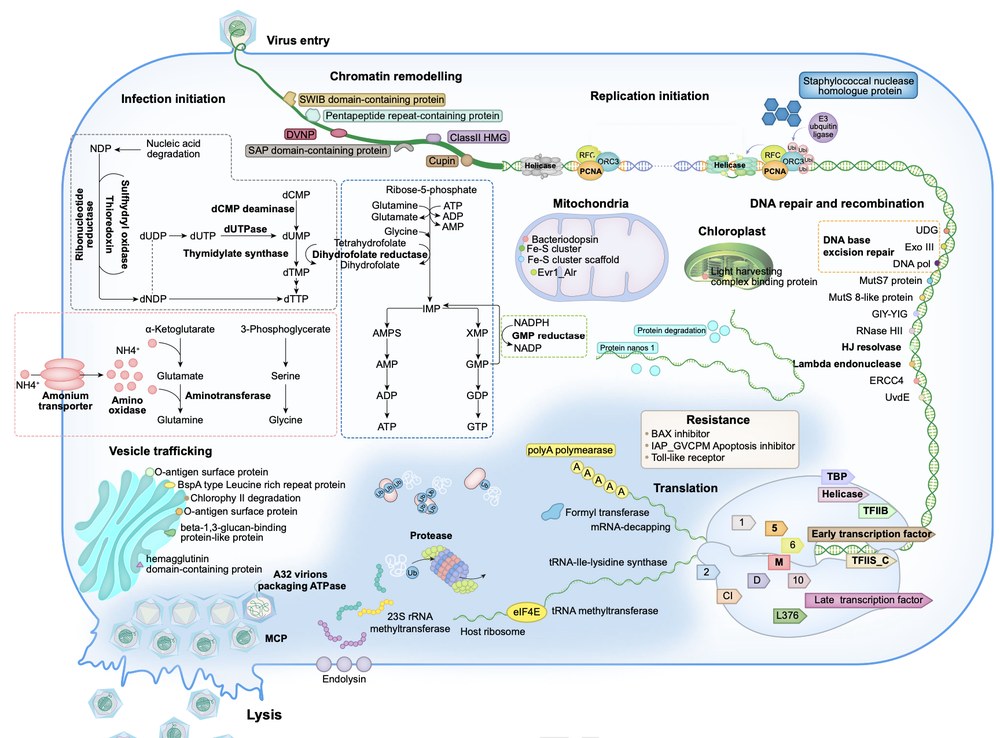
Marine phytoplankton contribute nearly half of global primary production, and haptophytes alone account for up to 50% of marine primary production. During my postdoctoral research at the University of Bergen (UiB, Norway), I focused on interactions between multiple haptophyte hosts and their infecting viruses, addressing a central question: How do viruses, through host cell reprogramming, reshape host metabolic capacity and potentially influence elemental biogeochemical cycling? By integrating multi-omics approaches with electron microscopy, I obtained three main findings: (1) Infection-associated cellular morphology changes and viral factory formation. Upon infection, viruses induce host cell re-compartmentalization and the formation of viral factories. In the viral factory, capsid assembly occurs first, followed by genome packaging to generate mature particles that are ultimately released, revealing a highly ordered intracellular assembly process. (2) Metabolic reprogramming in multiple pathways. Viral genomes encode extensive repertoires of auxiliary metabolic genes (AMGs) that modulate host metabolic potential across multiple pathways, including biosynthesis and energy metabolism, as well as the regulation of programmed cell death, redirecting cellular resources from host growth and survival toward viral replication. (3) Virus-driven horizontal gene transfer (HGT) shaping eukaryotic chromatin organization. Eukaryotes typically package chromatin with histones; a striking natural exception is dinoflagellates, which instead use dinoflagellate/viral nucleoproteins (DVNPs). Phylogenetic analyses indicate that DVNP genes encoded by haptophyte viruses were transferred into the dinoflagellate lineages by HGT. The genes were expressed, and the resulting DVNPs entered the nucleus, where they replaced histones as the primary chromatin proteins. This represents a clear example of how viruses can reshape eukaryotic host genetics over evolutionary timescales by HGT.
These results were published in Communications Biology (first author and co-corresponding author). Beyond this work, together with my supervisor, Prof. Ruth-Anne Sandaa, I co-led a project supported by the U.S. Department of Energy Joint Genome Institute (DOE-JGI), which enabled transcriptomic analyses related to this research. Additionally, I received funding from the Research Council of Norway to collaborate with the Spanish National Center for Biotechnology (CNB-CSIC) on viral structural studies. I have been invited twice to present this structural work at the Max Planck Society Ringberg Symposium.
In the publication lists below, * co-first author, # corresponding author.
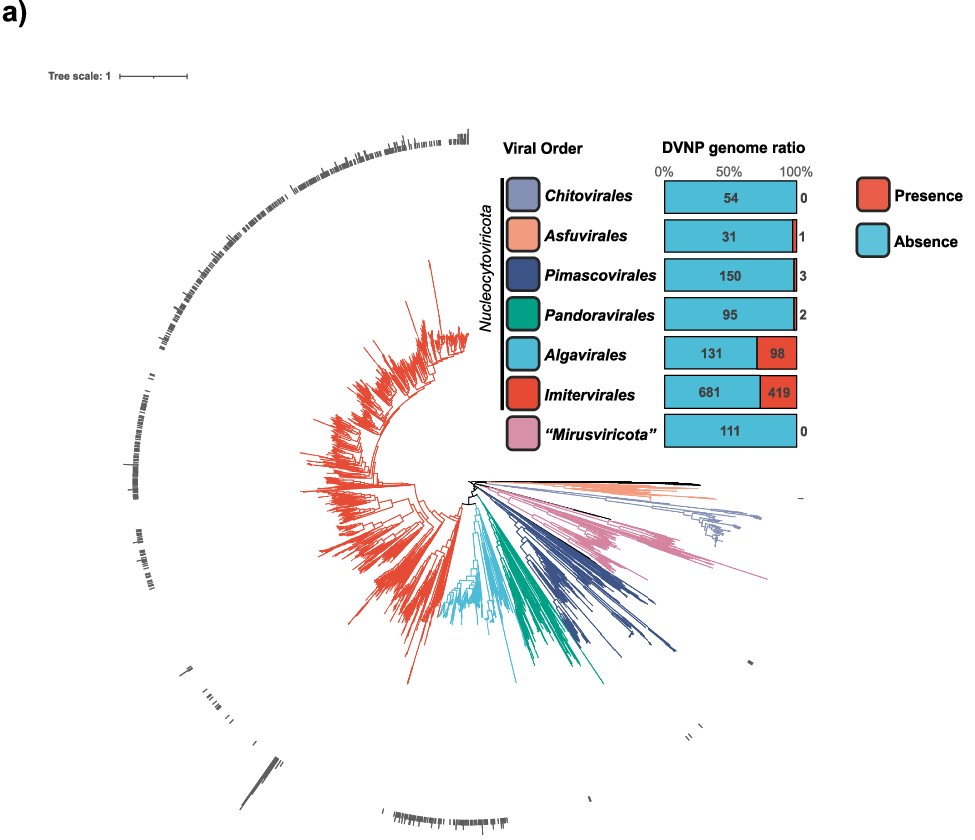
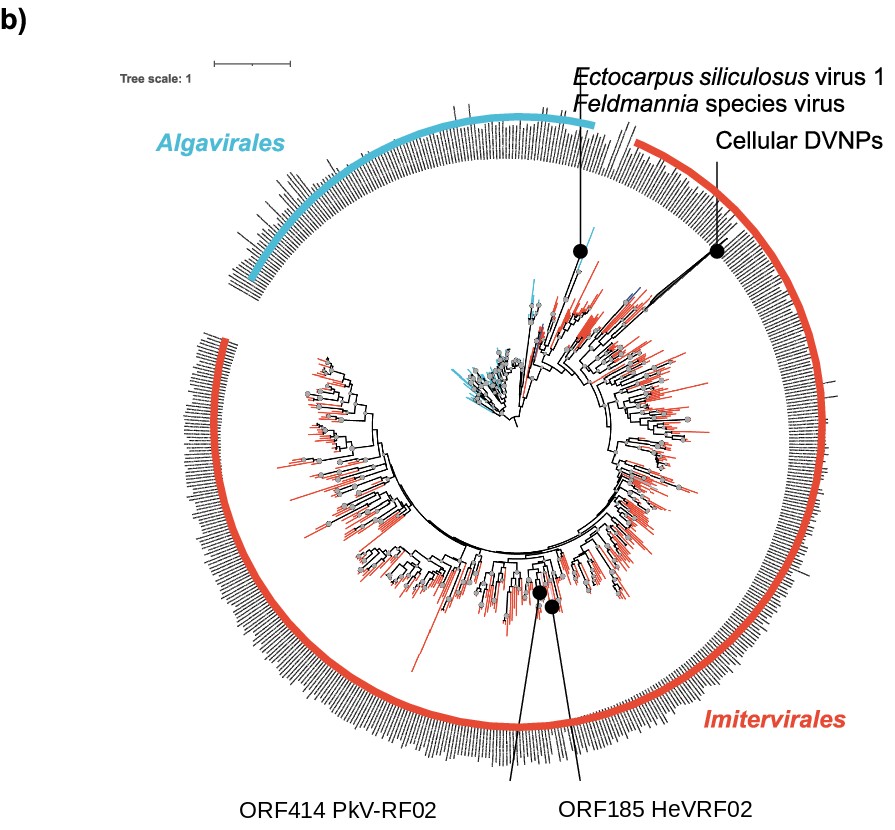
Figures from Wang et al. (2025), Communications Biology 8: 510, Fig. 4, CC BY 4.0.